
 EN
 ES
 VI

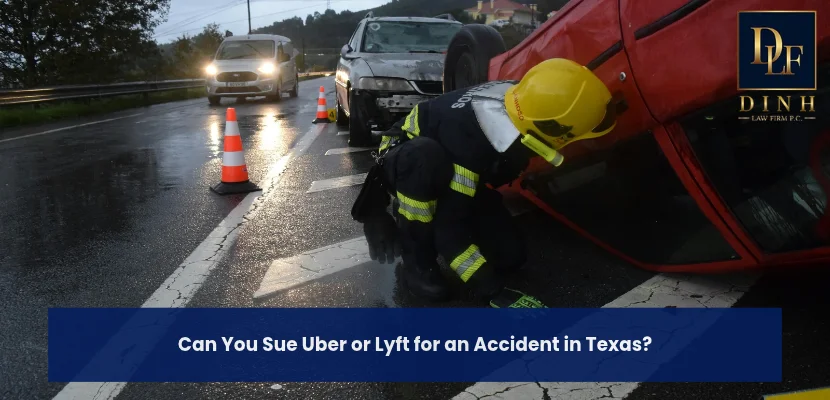
An Uber or Lyft crash can involve several insurers, and the coverage that applies depends on what the driver was doing in the app at the time.
Texas sets different insurance requirements for a driver waiting for a ride request, heading to a pickup, or carrying a passenger, and who caused the crash determines whose coverage is responsible for your losses.
Yes, you can pursue compensation after an Uber or Lyft accident in Texas. At Dinh Law Firm, our Houston personal injury lawyer review the trip details, identify the policies that apply, and explain your options for recovering damages. Contact us to find out which coverage applies to your crash.
Key Takeaways
- Texas generally treats rideshare drivers as independent contractors, and state law limits when Uber or Lyft can be held liable for a driver’s conduct.
- Insurance coverage depends on the driver’s app status when the collision occurred.
- At least $1 million in liability coverage applies from the moment a driver accepts a ride until the last passenger leaves the vehicle.
- Texas generally allows two years from the accident date to file a personal injury lawsuit.
- A Houston rideshare accident lawyer can identify the responsible parties and pursue the available insurance coverage.
Can You Sue Uber or Lyft Directly After a Crash?
Under Chapter 2402 of the Texas Occupations Code, a rideshare driver is generally an independent contractor rather than an employee when the company does not dictate the driver’s hours or other work and both sides agree in writing.
Texas also limits when a rideshare company can be held vicariously liable for a driver’s conduct, so most claims focus on the driver’s insurance and the coverage the platform must provide.
A claim against the company itself remains possible when the company’s own negligence contributed to the collision. We can review the circumstances to determine which parties may be responsible.
What Insurance Covers a Texas Rideshare Accident?
The available coverage depends on the driver’s activity at the time of the crash.
- App turned off: The driver’s personal auto policy generally applies.
- App on, waiting for a ride request: Texas requires at least $50,000 per injured person and $100,000 per accident for bodily injury, plus $25,000 for property damage.
- Ride accepted or passenger onboard: Texas requires at least $1 million per incident for death, bodily injury, and property damage combined, from the moment the driver accepts a ride until the last passenger leaves the vehicle.
Texas also requires the rideshare insurance to be primary, and the company’s policy does not depend on the driver’s personal insurer denying the claim first.
Disputes over fault, coverage limits, and damages can still delay payment. Keep trip records, photographs, medical documentation, and witness information, because insurers rely on them when they evaluate fault and damages.
What Happens After a Rideshare Accident in Houston?
In Houston and Harris County, a rideshare claim typically begins with an investigation of the collision, confirmation of the driver’s app status, and notice to the insurers involved.
The evidence often includes the police report, rideshare trip data, vehicle damage, and medical records. Texas law requires the rideshare company and its insurer to assist a claim investigation by providing the driver’s log-on and log-off times for the 12 hours before and after the accident.
Electronic records and witness accounts are easier to preserve early. Texas generally gives you two years from the date of the accident to file a personal injury lawsuit, although exceptions can apply, so an early review of your timeline helps avoid a missed deadline.
Frequently Asked Questions
What if the driver was not using the rideshare app?
If the app was off, the rideshare company’s coverage generally does not apply. The driver’s personal auto policy may cover the claim, subject to its terms, and we review that policy to determine what is available.
Can I recover compensation if the rideshare driver was not at fault?
Yes. If another motorist caused the collision, you may pursue a claim against that driver’s insurance. During a ride, Texas also requires the rideshare policy to include uninsured and underinsured motorist coverage and personal injury protection where Texas law otherwise requires those coverages, which can matter when the at-fault driver has little or no insurance.
Do I need a police report to file a claim?
A police report is useful evidence, but you can pursue a claim without one. Photographs, witness statements, medical records, and trip data can also support the claim.
How long does a rideshare accident claim take?
The timeline depends on the severity of your injuries, how clear fault is, insurance disputes, and whether you need further treatment. Claims involving multiple insurers often require more investigation.
Discuss Your Houston Rideshare Accident With Dinh Law Firm
Uncertainty about insurance coverage and your legal options can add stress while you recover from a rideshare accident.
Dinh Law Firm can review the circumstances of your crash, explain which insurance policies may apply, and help you understand the steps available to pursue compensation.
Schedule a consultation with Dinh Law Firm to discuss your claim, preserve important evidence, and understand the deadlines that may affect your case.